Aaron Rodgers Exposes ESPN On Live TV For Covering Up Dianna Russini-Mike Vrabel Scandal [PHOTOS]
Aaron Rodgers used his latest appearance on The Pat McAfee Show to reopen an old dispute with NFL reporter Dianna Russini while questioning why ESPN had seemingly given little attention to a controversy he believed deserved far more scrutiny.
The veteran quarterback appeared on the programme this week and wasted little time sharing his thoughts on several subjects outside football. After criticising Dr. Anthony Fauci and ESPN’s coverage of the COVID-19 pandemic, Rodgers turned his attention to another issue from the NFL offseason.
Without initially naming Russini, Rodgers referred to what he described as a “scandal” involving someone who votes on major league awards, including MVP and Coach of the Year.
“Then there was another scandal this offseason, too, involving a voter for MVP, for coach of the year,” Rodgers said. “How much time did your network spend on that?”
His question immediately created an awkward moment on the show.
McAfee appeared surprised by Rodgers’ wording and quickly tried to distance himself from the wider network.
“Whoa!” McAfee responded before asking, “Our network?”
The exchange stood out because The Pat McAfee Show is carried by ESPN, meaning Rodgers was criticising the company while appearing on one of its own programmes. McAfee’s reaction suggested he knew the conversation was moving into uncomfortable territory, particularly as Rodgers continued questioning how the story had been handled.
Rodgers did not fully explain the situation during the television portion of the broadcast. However, he returned to the subject after the programme moved from ESPN to its YouTube stream.
At that point, the quarterback became more direct.
“You have literally an individual that maybe used to work at ESPN that covers our league at the highest level, and there’s a major scandal, and it’s just, like, nobody can… talk about it,” Rodgers said.
He then raised questions about possible leaks, alleged tampering and whether those issues should matter when the person involved also holds voting power over some of the NFL’s most important individual awards.
“What are we even doing here?” Rodgers continued. “If it’s affecting certain things, if there’s leaks going on, if there’s tampering going on, if that person is also an MVP voter and a coach of the year voter.”
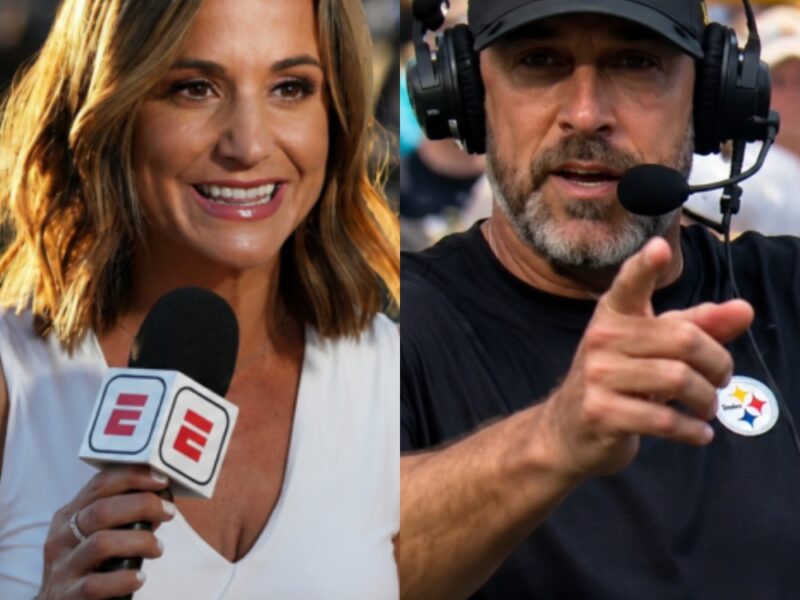
Although Rodgers did not immediately say Russini’s name in the first part of the discussion, his comments were widely understood as a reference to the reporter and the controversy involving Mike Vrabel.
The quarterback appeared especially frustrated by what he saw as a lack of coverage from ESPN. From his perspective, the network had failed to examine the matter with the same level of attention it might give other major NFL stories.
Rodgers later went even further, describing ESPN as a “gutless organization” and accusing it of having “no integrity.”
Those comments turned the appearance into another headline-making moment for the quarterback, who has repeatedly used his interviews with McAfee to challenge media organisations, reporters and public figures.
This was not the first time Rodgers and Russini had found themselves on opposite sides of a public dispute.
Their feud dates back several years and has included disagreements over her reporting about the quarterback’s career. In 2023, Rodgers pushed back against a report concerning a supposed “wish list” of players he wanted the New York Jets to pursue during the process that brought him to the team.
Rodgers disputed the suggestion that he had given the Jets a formal list of preferred additions. The report became a major talking point at the time, particularly because several players with previous connections to Rodgers were linked with or later joined New York.
The disagreement did not end there.
Rodgers also criticised Russini over her reporting involving quarterback Zach Wilson. Russini, however, publicly stood by her sources and did not withdraw her reporting.
Those earlier clashes helped explain why Rodgers’ latest comments immediately drew attention. His criticism of ESPN was not delivered as a general complaint about sports media. It also appeared to be another chapter in a long-running personal and professional dispute with one of the NFL’s most prominent reporters.
The setting made the moment even more striking.
Rodgers was speaking live on a show connected to ESPN while accusing the network of failing to cover a story involving someone who previously worked there. McAfee’s visible discomfort only added to the tension as the conversation unfolded.
Rodgers’ decision to continue the discussion once the broadcast moved to YouTube also raised questions about whether he felt more comfortable speaking freely outside ESPN’s television coverage.
There is no indication in the exchange that Rodgers presented new evidence relating to the claims he referenced. His comments were framed largely as questions about the seriousness of the matter, the possibility of leaks or tampering and the responsibility of media organisations to report on people who help decide major NFL awards.
The quarterback nevertheless made his position clear. He believed the story had been largely ignored, and he was not willing to let the subject disappear without challenging ESPN publicly.
Rodgers’ offseason appearances with McAfee have regularly produced moments that go far beyond game plans, training camp and the upcoming season. He has used the platform to discuss politics, healthcare, media coverage and his personal disputes with reporters.
This appearance followed that familiar pattern, but his direct attack on ESPN carried additional weight because it happened on the network’s own airwaves.

For Rodgers, the issue appeared to be larger than his previous disagreements with Russini. He questioned whether someone involved in controversial reporting or alleged leaks should also have influence over voting for awards that can shape the careers and reputations of players and coaches.
ESPN did not provide a response within the original report to Rodgers’ accusations.
Once again, Rodgers managed to turn an offseason television appearance into a much wider debate about the NFL media, journalistic accountability and the relationship between major networks and the reporters who cover the league.
The football season may not have started yet, but Rodgers has already found a way to place himself back at the centre of the conversation.