Video Post Accusing Caitlin Clark Of Being The “Biggest Coward in Sports” Has Garnered Over 4.7 Million Views
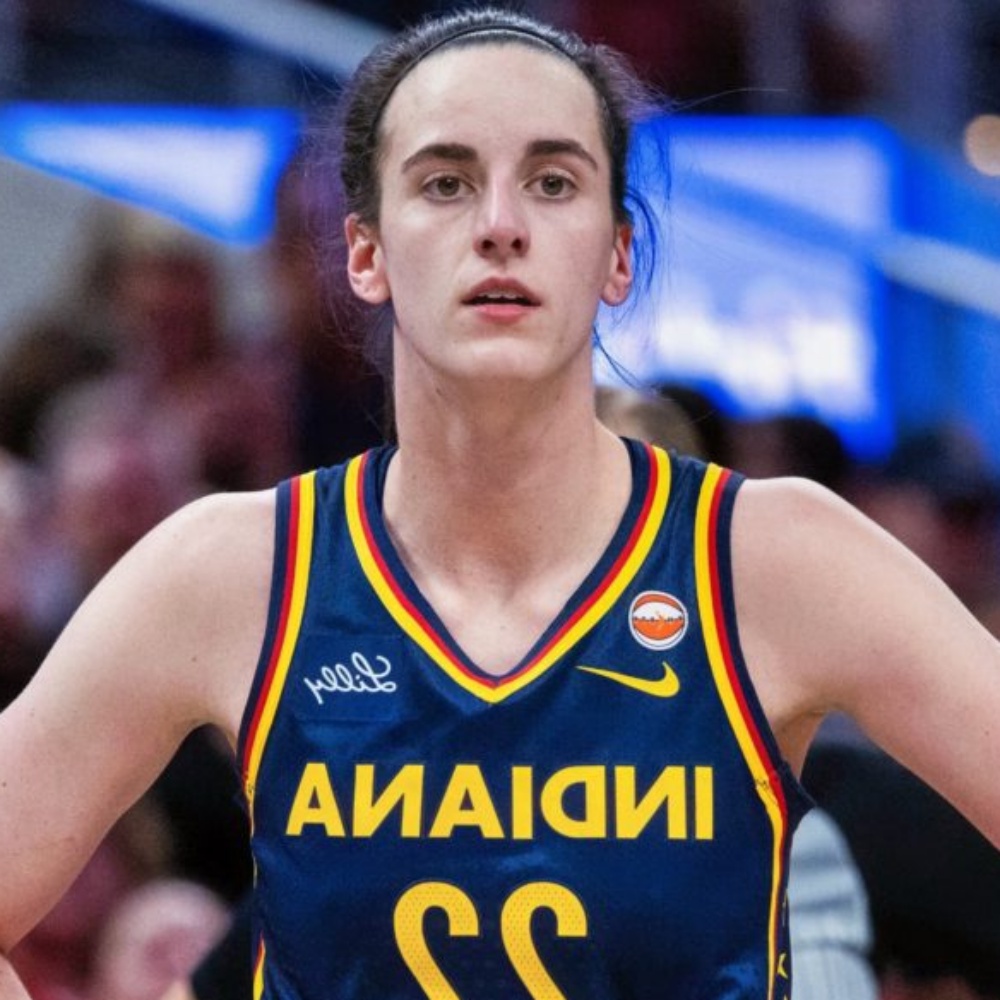
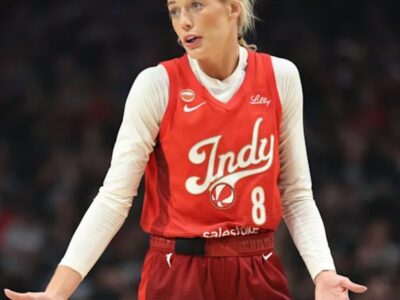
Caitlin Clark has found herself at the centre of another heated online debate after refusing to take a firm public position on transgender athletes in women’s sports.
The Indiana Fever star was questioned by reporters following a recent game about comments made by her teammate Sophie Cunningham. Cunningham had previously spoken out about transgender participation in women’s competition, prompting reporters to ask Clark whether she shared that view.
Clark chose not to give a direct political answer.
Instead, she said decisions about eligibility and participation should be handled by the leagues and governing bodies responsible for setting the rules. She also noted that the issue was not something being discussed inside the Fever locker room.
According to Clark, the team’s attention remains on basketball and winning games rather than the wider political arguments surrounding the sport.
When a reporter attempted to press her for a clearer response, Clark declined to expand on what she had already said.
“I just answered,” she replied.
The brief exchange immediately spread across social media, where Clark’s decision to remain neutral drew criticism from people with very different political views.
Some argued that she should have publicly supported transgender athletes. Others believed she should have taken a stronger position in defence of women’s sports. By avoiding both sides, Clark managed to frustrate critics across the political divide, which is quite an achievement in a culture where everyone apparently expects athletes to provide a fully formed policy platform after a basketball game.

The strongest criticism came from conservative commentator Matt Walsh, who publicly accused Clark of lacking courage.
In a post that quickly attracted widespread attention, Walsh described Clark as possibly “the biggest coward in the history of sports.”
He criticised her for refusing to speak about what he described as anti-white racism directed at her since she entered the WNBA. He also attacked her response to the transgender athlete question, arguing that it should have been simple for her to answer.
“Caitlin Clark might be the biggest coward in the history of sports,” Walsh wrote. “She refuses to say anything about the anti-white racism she has been subjected to since coming into the league. She punts on the trans question, which is the easiest question you could ever be asked. No spine.”
The post rapidly gained traction, passing 4.7 million views as users argued over both Walsh’s language and Clark’s decision to avoid taking a side.
For critics who agreed with Walsh, Clark’s enormous profile means she has a responsibility to speak openly about controversial issues affecting women’s basketball.
They believe her position as one of the most visible athletes in the WNBA gives her a platform that should be used, particularly when the debate concerns the future of women’s competition.
Others strongly rejected that expectation.
Clark’s supporters argued that she is a professional basketball player, not a political spokesperson, and should not be required to provide an opinion on every disputed social issue placed in front of her.
From their perspective, her answer was reasonable. The rules are determined by leagues and governing organisations, not by individual players responding to questions during postgame interviews.
They also pointed out that refusing to enter a political fight does not necessarily mean someone lacks an opinion. Clark may simply prefer to keep certain views private or avoid creating further division around her team.
The controversy reflects the intense scrutiny surrounding Clark since she entered the WNBA.
Her performances, popularity and impact on women’s basketball have made her one of the most closely watched athletes in the United States. With that attention has come constant pressure to comment on subjects extending far beyond the court.
Reporters and commentators have asked Clark about race, politics, rivalries, league culture and social issues. Even when she attempts to keep her answers focused on basketball, those responses can still become national talking points.
In this case, the discussion began with Cunningham’s comments but quickly shifted toward Clark and what people believed she should have said.
Cunningham has been far more direct about her position. She has publicly supported what she describes as protecting biological women in women’s sports while denying that her views are motivated by hatred toward transgender people.
Clark chose a different approach.
She did not endorse Cunningham’s statement, but she also did not criticise it. She placed responsibility for the issue with the organisations that create and enforce the rules.
That middle position satisfied very few people online.
Those demanding a statement in support of transgender inclusion viewed her response as evasive. Those wanting her to oppose transgender participation also saw the answer as a refusal to defend female athletes.
The resulting backlash illustrates the difficult position high-profile athletes face when they are asked to address divisive cultural issues.
Any direct answer risks alienating a large section of the audience. Refusing to answer can produce an equally strong reaction, as Clark discovered when Walsh’s post reached millions of users.
The debate has also raised a broader question about how much responsibility athletes should carry outside their sport.
Some fans believe public figures with enormous platforms should speak clearly when controversial issues arise. Others argue that athletes should be allowed to concentrate on their careers without being treated as political representatives for entire communities.
Clark has consistently tried to keep much of her public messaging centred on basketball. Her recent response followed that pattern, as she repeatedly brought the discussion back to the Fever’s locker room and the team’s goal of winning games.
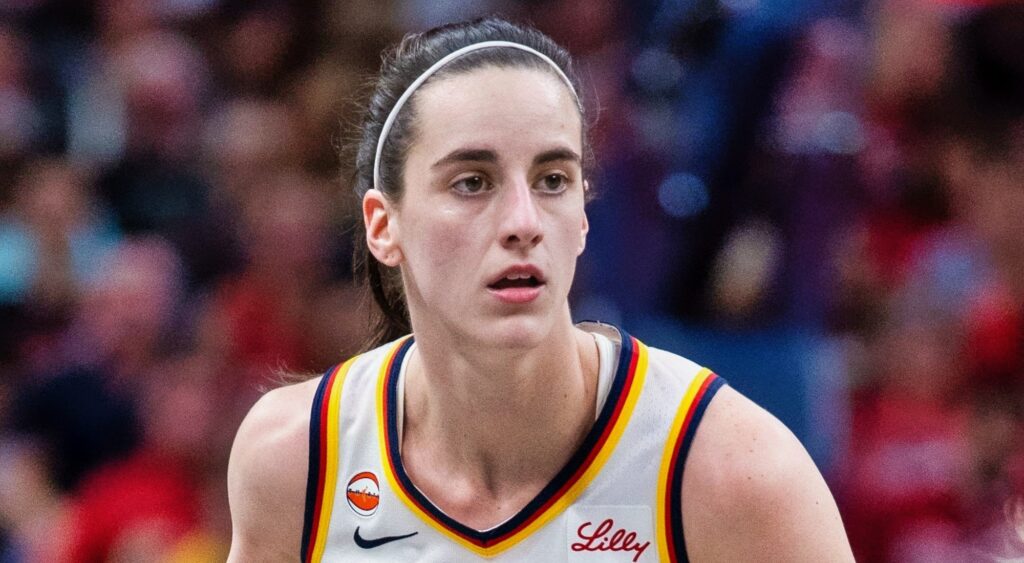
While the online argument continues, Clark’s production on the court remains strong.
Through 26 games, she was averaging 21.5 points, 8.0 assists and 4.0 rebounds per game.
Those numbers show that her performance has not been overshadowed inside the lines, even as conversations around her continue moving into politics and culture.
The viral criticism is unlikely to disappear quickly. Walsh’s post continues to circulate, while supporters and critics debate whether Clark showed restraint or avoided a responsibility that comes with her influence.
Clark, however, has already made her position on the interview clear.
She answered the question once, refused to be pushed into saying more and returned her attention to basketball.