ESPN Is Getting Destroyed For Their Comments About Cheryl Reeve’s “Trans Kids” Shirt & Sophie Cunningham On Live TV [VIDEO]
ESPN is facing criticism from WNBA viewers after an on-air discussion praised Minnesota Lynx head coach Cheryl Reeve’s comments about transgender youth while revisiting her disagreement with Indiana Fever guard Sophie Cunningham.
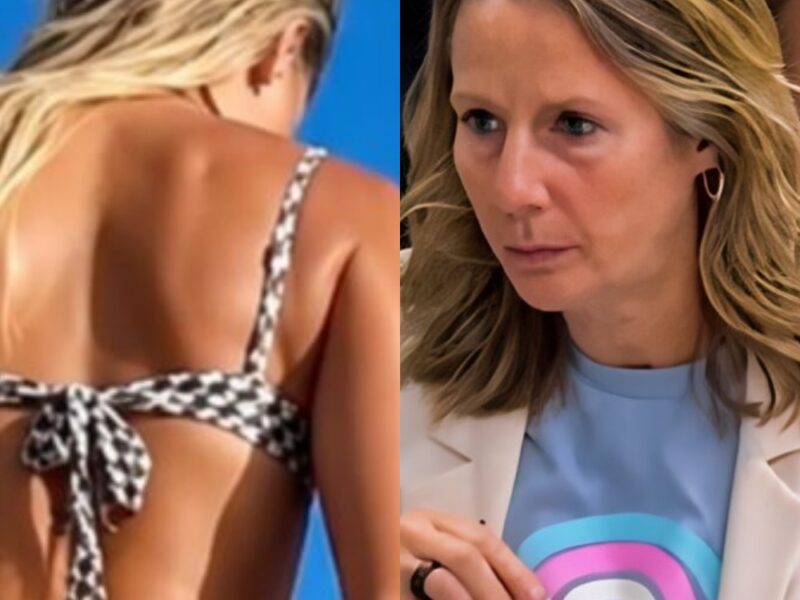
The moment occurred during ABC’s Sunday broadcast, when cameras showed Reeve sitting on the Minnesota bench with a “Trans Kids Belong” T-shirt visible underneath her blazer.
The broadcast team used the image as an opportunity to discuss Reeve’s position on transgender inclusion. One announcer encouraged viewers to listen to what the Lynx coach had to say, describing her comments as “incredibly thoughtful.”
The segment also mentioned a recent conversation between Reeve and Cunningham, who have publicly expressed different views on transgender participation in women’s sports.
Once the clip reached social media, many viewers accused ESPN of promoting one side of a highly divisive debate.
Fans did not appreciate ESPN weighing in the way it did.
The video showed Reeve on the sideline as the broadcasters explained the message on her shirt and discussed her support for transgender youth.
Rather than simply noting what Reeve was wearing, the broadcast praised the way she had addressed the subject. That language became the main source of frustration for critics, who believed ESPN was presenting her position more favorably than Cunningham’s.
Some viewers questioned whether the network supported allowing transgender women to compete in female athletic categories.
“So ESPN is pro biological males competing against biological females?” one person asked.
Another viewer described ESPN as “a joke” and argued that male and female athletes should not compete against one another.
A third commenter focused on Title IX, claiming the law must protect athletes who are biologically female or risk becoming meaningless.
Another response defended Cunningham’s position using vulgar language and questioned why her comments had been treated as controversial.
The reactions showed that viewers were not only responding to Reeve’s shirt. They were also frustrated with how ESPN framed the larger disagreement.
CHERYL REEVE’S SHIRT BROUGHT THE DEBATE BACK TO LIVE TELEVISION
Reeve’s “Trans Kids Belong” shirt was clearly visible underneath her blazer during the game.
The message was widely interpreted as a public show of support for transgender youth, especially because of the ongoing controversy involving Cunningham.
Reeve has supported transgender inclusion and encouraged people to approach the issue with respect and conversation. Her position stands in contrast to Cunningham’s belief that women’s sports should be reserved for biological females.
That disagreement has now moved beyond comments made during interviews or press conferences.
It has appeared in clothing worn on the sideline, television discussions, social media arguments and demonstrations outside WNBA arenas.

Image credit: Imagn Images
The ABC broadcast did not treat Reeve’s shirt as a random fashion choice. The announcers connected it directly to the national discussion surrounding Cunningham and transgender athletes.
One member of the broadcast team encouraged viewers to hear Reeve’s full perspective and described her remarks as thoughtful.
Supporters of Reeve viewed the segment as an attempt to bring empathy and context to a difficult subject.
Critics saw something very different.
They believed the network was endorsing Reeve’s opinion while suggesting that Cunningham’s concerns were unreasonable or insensitive.
That difference in interpretation helped the clip spread quickly.
SOPHIE CUNNINGHAM HAS BECOME A CENTRAL FIGURE IN THE ARGUMENT
Cunningham recently drew national attention after saying she believes women’s sports should be protected from athletes who were born male.
Her comments generated strong reactions from players, coaches, media personalities and fans.
Supporters praised Cunningham for expressing a position they believe protects fairness and safety in women’s competition. Opponents argued that her comments excluded transgender athletes and contributed to a hostile environment around the issue.
Cunningham has not appeared willing to withdraw her position simply because it created backlash.
That has made her one of the most discussed WNBA players for reasons that extend well beyond her performance with the Fever.
Reeve has taken the opposing side, expressing support for transgender people while calling for respectful dialogue.
The two reportedly spoke about the issue, although the original report did not provide a detailed account of everything said during their conversation.
The ESPN segment referred to that meeting while discussing Reeve’s shirt.
For critics, the network’s positive description of Reeve’s comments suggested that it had already decided which position deserved approval.
VIEWERS ACCUSED ESPN OF PUSHING AN AGENDA
The strongest reactions were directed less at Reeve than at ESPN.
Viewers argued that a national sports network should report on the disagreement without praising one participant’s position.
Some believed the description of Reeve’s comments as “incredibly thoughtful” crossed the line between covering the story and taking a side.
Others accused ESPN of promoting a political or cultural agenda during a basketball broadcast.
The network has not avoided social issues in its coverage, particularly when athletes, coaches or teams make public statements connected to current debates.
In this case, however, critics believed the broadcasters failed to give equal weight to the concerns expressed by Cunningham and her supporters.
The comments beneath the viral clip repeatedly returned to competitive fairness.
Those viewers argued that transgender inclusion in women’s sports raises questions involving physical differences, eligibility rules and the purpose of female athletic categories.
Reeve’s supporters see the subject through a different lens, focusing on inclusion, dignity and the treatment of transgender youth.
Neither side viewed the issue as a minor disagreement.
That intensity made even a short television segment enough to create another round of outrage.
THE WNBA DEBATE IS NO LONGER LIMITED TO BASKETBALL
The disagreement surrounding Cunningham and Reeve has become part of a much larger national discussion.
It now follows WNBA teams beyond the court.
Supporters and counter-protesters have gathered outside arenas. Videos of confrontations have circulated online. Coaches and players have been asked to explain their positions during press conferences.
Even clothing worn during games has become a political statement.
The league and its teams have largely continued with their regular schedules while individual players, coaches and commentators speak for themselves.
That has not stopped fans from demanding clearer responses.
Some want the WNBA and its broadcast partners to openly defend transgender inclusion. Others want firm rules preserving women’s divisions for biological females.
ESPN’s segment did not resolve any of those questions.
Instead, it gave both sides another example to use in their arguments.
THE BROADCAST’S WORDING BECAME THE REAL STORY
Reeve had every right to wear a shirt expressing her position, just as Cunningham has been able to explain her own views publicly.
The controversy centered on how the television crew discussed those positions.
By describing Reeve’s remarks as especially thoughtful, the broadcast appeared to offer an evaluation rather than a neutral summary.
That choice may have seemed harmless to people who agreed with Reeve. To viewers who shared Cunningham’s concerns, it sounded like ESPN was dismissing their position before the debate had even begun.
The clip therefore became less about the shirt itself and more about trust in sports media.
Critics argued that ESPN should cover the controversy without telling viewers which side deserves admiration.
Supporters of the segment believed the announcers were simply encouraging people to listen to a coach speaking about respect and inclusion.
The gap between those interpretations remains wide.
Cunningham continues to stand by her belief that biological males should not compete in women’s categories. Reeve continues to support transgender inclusion and the message that transgender children belong.
ESPN’s decision to highlight Reeve’s shirt brought those opposing positions back into the same conversation.
Judging by the reaction online, the network’s attempt to add context only gave viewers something new to fight about.