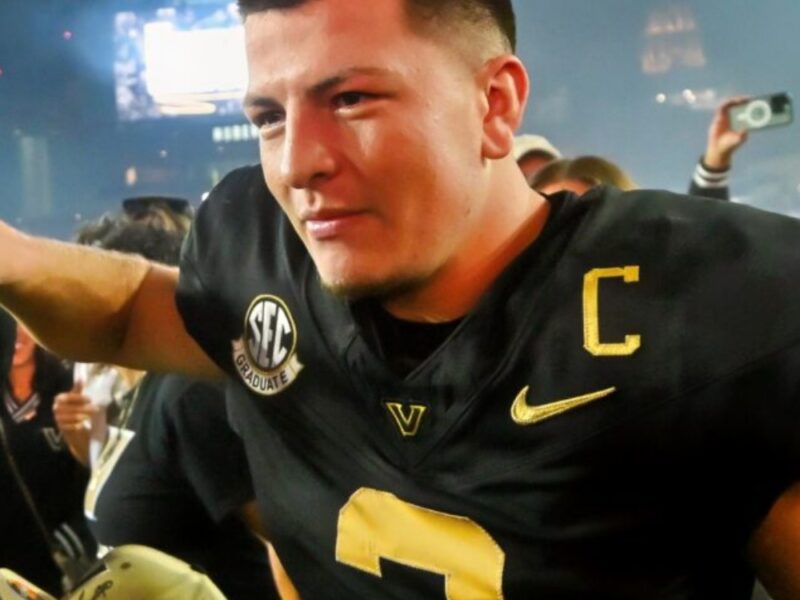
The Entire Internet Is Tripping Out Over Viral Diego Pavia Report
Viral Diego Pavia Report Fooled Football Fans Before One Detail Exposed The Truth
A viral report claiming Diego Pavia was preparing to return to college football managed to fool plenty of fans before social media users noticed one important problem.
The report was not real.
The post originated from No3 Sports, a parody account designed to resemble the college sports outlet On3. It claimed that a federal judge had restored Pavia’s college eligibility, supposedly clearing the way for the former Vanderbilt quarterback to play another season at the college level.
To make the story appear more convincing, the post attributed the information to “Pete Nokos,” another parody account based on On3 college football reporter Pete Nakos.
The names and branding contained clues that the report was a joke. Still, that did not stop it from spreading or prevent football fans from reacting as though Pavia had genuinely found a way back into college football.
The account itself, No3 Sports, is a parody version of On3.
Pavia had already moved on from the college game after completing his time at Vanderbilt.
Following the 2026 NFL Draft, he signed with the Baltimore Ravens as an undrafted free agent. However, Baltimore waived him shortly before training camp, leaving the quarterback with limited options as he attempted to continue his football career.
That situation may have made the parody report seem believable to some readers.
With Pavia no longer on the Ravens’ roster, the suggestion that he could seek another college season was just plausible enough to attract attention from people who saw the headline without checking where it came from.
The post quickly generated comments from users who appeared convinced that Pavia was actually returning.
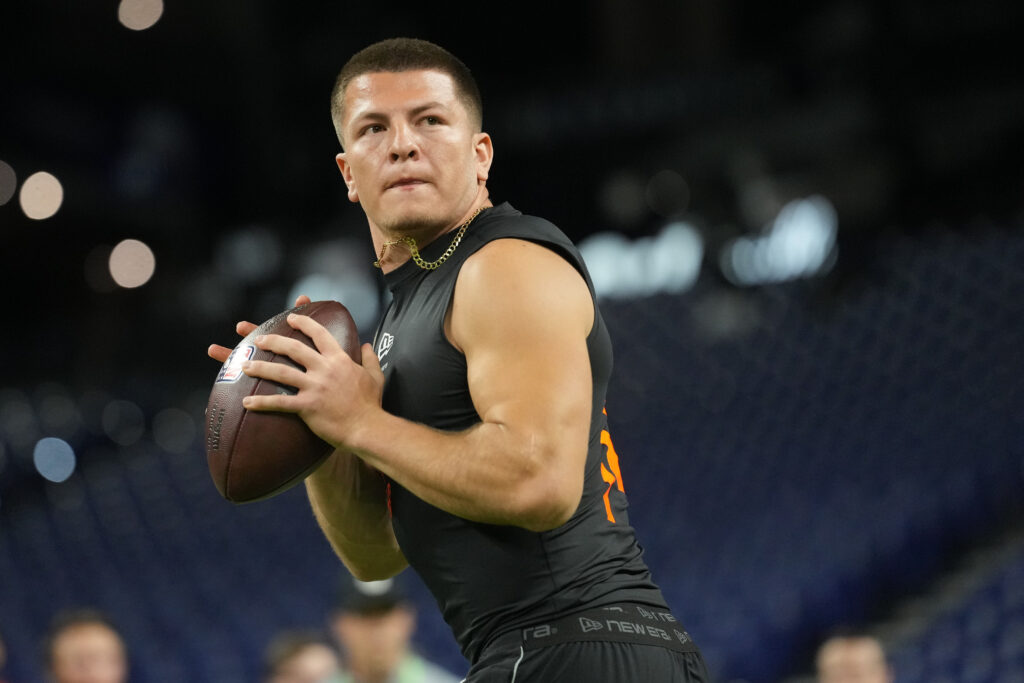
Photo credit: Kirby Lee-Imagn Images
One fan immediately dismissed Pavia’s professional prospects.
“He’s toast,” the user wrote. “Burned a lot of bridges with his post-Heisman behavior.”
Another person treated the supposed return as evidence that Pavia had failed to establish himself at the professional level.
“Nothing screams ‘I cant compete in the NFL because im not good enough’ like graduating college then returning for a fifth season of football,” the fan wrote.
The criticism continued even though the event being discussed had never happened.
A third user appeared more skeptical and questioned whether a player who had already signed and practiced with an NFL team would even be allowed to return to college.
“That has to be a joke right?” the person asked. “You can’t sign with and practice in the NFL and come back to college!”
That user was closer to identifying the real issue, although the answer had nothing to do with a complicated eligibility ruling.
The report was simply satire.
Another commenter wondered what would happen if the quarterback became eligible but could not find a major program interested in adding him.
“And what if no major school wants him?” the user wrote. “That would be even funnier.”
Eventually, someone stepped in to explain what many people had missed.
“This is a parody account as is the Pete N. acct,” the user pointed out.
The account itself, No3 Sports, is a parody version of On3.
The confusion showed how quickly a fabricated sports report can spread when it looks similar to content from an established outlet.
No3 Sports uses a name and presentation that closely resemble On3, while the “Pete Nokos” account imitates the identity of a real reporter. Anyone scrolling quickly could see the post, recognize the familiar-looking format and assume the information had come from a legitimate source.
Many of the reactions suggested that users responded before opening the account or checking whether other credible reporters had confirmed the story.
Pavia’s uncertain professional situation also gave the parody post a believable foundation.
After going undrafted and then being released by Baltimore, the former Vanderbilt quarterback was no longer attached to an NFL roster. A dramatic attempt to regain college eligibility therefore sounded possible to fans who were unfamiliar with the source or the rules involved.
Still, the parody account did not hide its nature particularly well.
Both the outlet name and the supposed reporter’s name were altered versions of their real counterparts. A closer look at either account would have revealed that the report was not intended to be treated as legitimate news.
That closer look apparently came after many users had already shared their opinions.
The responses ranged from criticism of Pavia’s ability to jokes about whether another college program would want him. Some commenters even debated the eligibility implications of his brief time with the Ravens.
All of that discussion was based on a return that had never been announced.
The viral reaction is another example of how quickly parody posts can escape their original context.
Once screenshots or reposts begin circulating, the parody label may become harder to notice. People see the headline, recognize the athlete’s name and jump directly into the comments without confirming whether the source is legitimate.
In this case, fans spent time debating Pavia’s future before realizing they were reacting to a joke.
Pavia remains without a team after being waived by the Ravens before training camp. Nothing in the viral parody post changed his eligibility or announced a return to Vanderbilt or another college football program.
The report may have been fake, but the reactions beneath it were very real.
For several football fans, checking the source came only after they had already decided what Pavia’s imaginary return said about his career.