Caitlin Clark Fires Back At Reporter Who Tried Pressing Her On Transgender Athletes In Women’s Sports [VIDEO]
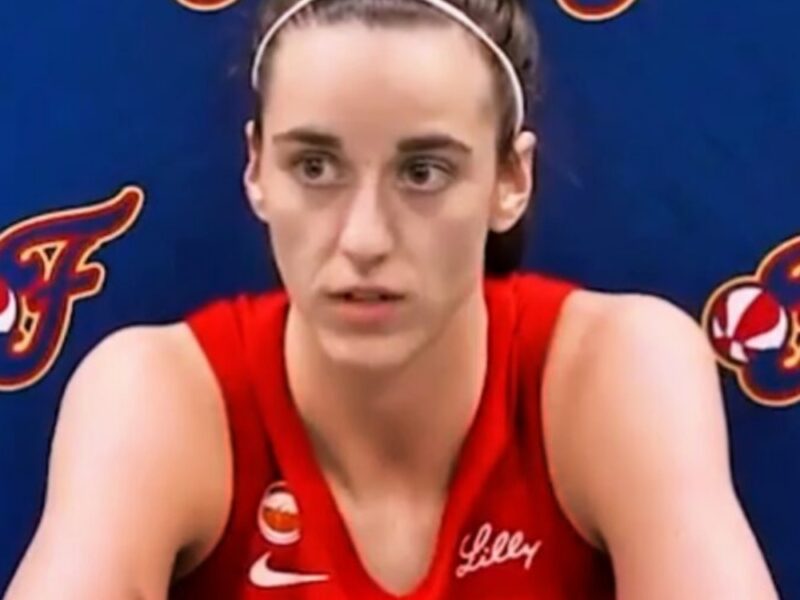
Caitlin Clark made it clear that she had no interest in turning a postgame press conference into a political debate after a reporter repeatedly asked her about transgender athletes in women’s sports.
The exchange took place following the Indiana Fever’s 108-100 loss to the Minnesota Lynx on Sunday night.
Rather than offering a personal position on the issue, Clark said decisions involving transgender participation should be handled by leagues, governing bodies and the athletes directly affected by those policies.
Her priority, she explained, was basketball.
“I think for us, it’s not really a discussion we really have in our locker room,” Clark said. “I think it’s for leagues and the governing bodies to work with their athletes to find solutions, but our focus is on basketball.”
The Fever guard then attempted to move the conversation back toward Indiana’s performance against Minnesota.
“That’s what we talk about and how we can get wins, and obviously we didn’t do that tonight,” Clark continued. “So, we need to find an area to improve in that way.”
When the reporter tried to follow up on the same subject, Clark responded with a short reminder.
“I just answered for you,” she said.
The moment quickly spread across social media, with viewers debating whether Clark had avoided the question or simply refused to let someone else pull her into a controversy she did not create.
The question came after comments from Clark’s Indiana teammate Sophie Cunningham attracted significant attention.
During an ESPN feature, Cunningham spoke about transgender participation in women’s sports and said she wanted to protect young girls who should not have to compete against biological males.
Her remarks triggered a strong response both inside and outside the WNBA.
Some fans publicly supported Cunningham’s position, while others criticized her comments and accused her of targeting transgender athletes and young people.
Minnesota Lynx head coach Cheryl Reeve also entered the wider conversation when she wore a shirt reading “Trans Kids Belong” during the game against Indiana.
The shirt was widely viewed as a public message of support for transgender inclusion, particularly because the Lynx were playing Cunningham and the Fever at the time.
That background appeared to be the reason Clark was asked to comment after the game.
However, Clark did not repeat Cunningham’s position, criticize her teammate or express support for Reeve’s message. She instead placed responsibility on the organizations that create and enforce competition rules.
Her response avoided taking a side in a discussion that has become increasingly divisive across sports.
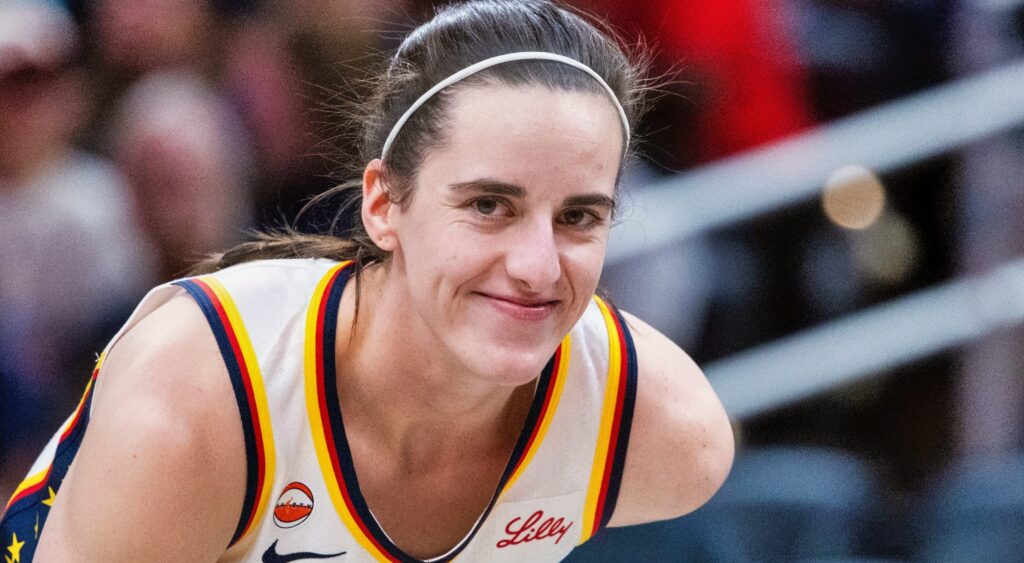
Photo credit: Trevor Ruszkowski-Imagn Images
Clark’s answer also suggested that the subject has not become a major discussion inside Indiana’s locker room.
According to her, Fever players remain focused on basketball, winning games and correcting the problems that led to Sunday’s loss.
That explanation did not satisfy the reporter, who appeared to want Clark to elaborate on Cunningham’s comments.
Clark’s “I just answered for you” response ended the exchange without creating another quote that could be interpreted as an endorsement or condemnation of either side.
The line was blunt, but it was not a lengthy outburst.
Clark did not raise her voice, insult the reporter or launch into an argument. She simply indicated that she believed her first response had already addressed the question.
Still, the short interaction was enough to become another viral moment involving one of the most closely watched athletes in American sports.
Clark’s comments regularly receive attention far beyond the basketball audience. A brief response during a press conference can be clipped, reposted and turned into a broader debate within minutes.
In this case, the headline surrounding the exchange quickly became larger than what Clark actually said.
She did not offer a detailed argument about transgender athletes. She did not claim that politics should never be discussed in sports. She also did not directly defend Cunningham.
Her position was that the matter should be handled by the leagues and governing bodies responsible for setting participation rules.
That distinction is important.
Clark was being asked to respond to a teammate’s controversial statement immediately after a difficult loss. Rather than speaking on Cunningham’s behalf, she redirected attention toward her own responsibilities as a player.
Clark Wanted To Discuss Indiana’s Loss
The Fever had just fallen 108-100 to one of the strongest teams in the league.
Indiana competed throughout the game but could not stop Minnesota from producing enough offense to secure the victory.
The loss dropped the Fever to second place in the Eastern Conference and gave Clark a more immediate concern than the political discussion surrounding her teammate.
Her postgame comments showed that frustration.
Clark said Indiana needed to identify areas in which it could improve and find a better path toward winning games. That was the subject she appeared prepared to discuss when the transgender-athlete question was introduced.
Professional athletes are frequently asked to comment on issues involving teammates, league policies and controversies beyond the game itself.
Some choose to offer detailed opinions. Others prefer to avoid speaking without enough information or without being directly involved.
Clark chose the second approach.
Her answer placed the issue above her “pay grade” without using that exact phrase. She suggested that athletes should be involved in the process, but that leagues and governing organizations ultimately need to establish workable policies.
That response allowed her to avoid making a personal declaration while still answering the basic question.

Photo credit: Grace Smith/IndyStar-USA TODAY NETWORK via Imagn Images
The exchange also highlighted the difficult position Clark occupies as the most recognizable player on the Fever.
Even when a controversy begins with someone else, reporters often look to Clark for a response because her comments will attract the largest audience.
Cunningham made the original remarks, and Reeve responded through the message on her shirt. Clark was then asked to place herself somewhere between those positions.
She declined to do so.
That does not necessarily reveal what Clark personally believes about the issue. It only shows that she did not want to address it in that setting.
Some viewers praised her for maintaining focus and refusing to be drawn into a political argument. Others believed she should have provided a clearer answer because of her influence within women’s sports.
Both reactions gave the clip even more momentum online.
Clark, however, appeared ready to move on as soon as she finished speaking.
Her concern was Indiana’s inability to defeat Minnesota and the adjustments the Fever needed to make after another loss.
The transgender-athlete debate will continue regardless of whether Clark participates in it. Cunningham’s remarks and Reeve’s public response have already ensured that the subject will remain part of the conversation around the league.
For Clark, Sunday’s press conference showed where she currently draws the line.
She was willing to acknowledge the question and identify who she believed should handle the issue.
She was not willing to keep answering it after she had already made her position on the discussion clear.